
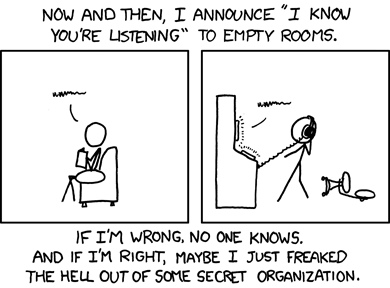
(From "XKCD", a web comic by Randall Munroe)
Paranoia has simply become a state of being for most people. It seems more common to be paranoid than to simply accept reality for what we are told it is. Harry Caul is the predecessor to the modern man.
Through various tactics, particularly repetition (of musical theme, of lines of dialogue, of character actions), Coppola puts us in a position to be paranoid. We are strung along, just as Harry is, hoping for a resolution (for the wrong party). The ending is so uncomfortable, so full of fear that you are left feeling much like Harry, unsure of what to do, knowing what you know, having seen what you have seen, and with the constant threat of being watched hovering over your head.

I completely agree that The Conversation has as much meaning if not more in today's world as it did in the 1970's.
ReplyDeleteMy recent Then & Now piece dealt with the issue of current camera surveillance techniques and how it endangers our civil liberties as we know it. Unfortunately we find ourselves in a post-Sept 11 era where society has become so accustomed to "being watched" that we are nearly desensitized to the process. Whats more, our obsession with reality TV has also contributed to our complacency with the government's actions of looking in on our own lives.
Great post!